How to Improve Your Furnace Efficiency: Essential Energy Saving Tips and Upgrades
Heating costs rise quickly during Northern Colorado winters, so improving furnace efficiency is one of the most impactful ways homeowners can save money and increase comfort. Furnace efficiency is a measure of how much fuel the furnace converts to usable heat, commonly expressed as AFUE (Annual Fuel Utilization Efficiency), and higher AFUE ratings directly reduce fuel consumption and monthly bills. This guide shows practical DIY steps, professional maintenance guidance, upgrade and replacement decision frameworks, building envelope improvements, and the financing and incentive landscape homeowners should know in 11/2025. You will learn how simple actions like filter changes and thermostat setbacks cut energy use, why annual tune-ups preserve efficiency and safety, how to decide between repair and replacement based on age and AFUE, and which insulation or ductwork fixes deliver the biggest returns. For local help, Halo Heating and Air provides heating services across Northern Colorado and can schedule inspections and maintenance—call (970) 469-3545 to arrange an evaluation.
The next section explains why furnace efficiency matters specifically for Northern Colorado homeowners.
Why Does Furnace Efficiency Matter for Northern Colorado Homeowners?
Furnace efficiency matters because it translates directly into lower heating bills, improved comfort, and reduced environmental impact within a region that typically has an extended heating season. AFUE measures the percentage of fuel converted to heat: a higher AFUE lowers fuel consumption and reduces annual energy spending, which is especially important in colder months. Maintaining or improving furnace efficiency also reduces carbon emissions per household by lowering natural gas or fuel use, aligning with ENERGY STAR goals and recent DOE regulatory emphasis. Understanding these benefits makes it easier to prioritize the most cost-effective upgrades and maintenance steps for homes in Loveland, Windsor, Greeley, and nearby communities.
The following subsection quantifies the impact on bills and energy use.
How Does Furnace Efficiency Impact Your Heating Bills and Energy Use?
AFUE, or Annual Fuel Utilization Efficiency, defines how much of the fuel input becomes heat for the home, with modern high-efficiency furnaces reaching mid-90s AFUE percentages and older units often near 80% or lower. A furnace that improves from 80% to 95% AFUE reduces wasted fuel by converting more input energy into usable heat, which typically lowers annual heating costs by a measurable percent depending on local fuel prices and heating loads. For example, if a household spends $1,500 per winter on heating with an 80% AFUE unit, moving to a 95% AFUE furnace could lower fuel use roughly 16% and save about $240 per season under similar usage patterns. Recent research and 2025 DOE guidance emphasize that AFUE improvements are one of the most direct levers homeowners have to reduce both fuel spend and overall energy use. Understanding AFUE helps homeowners compare options and make informed repair or replacement decisions.
What Are the Environmental Benefits of an Efficient Furnace?
An efficient furnace reduces greenhouse gas emissions by using less fuel to maintain the same indoor temperature, which lowers a household’s carbon footprint and contributes to regional emissions reductions. Efficiency gains also reduce demand for fossil fuel extraction and distribution, minimizing upstream environmental impacts associated with production and transport. In practical terms, higher AFUE combined with better insulation and duct sealing multiplies benefits: less wasted heat means fewer combustion cycles and lower pollutant output per heating hour. Recent DOE 2025 regulations and ENERGY STAR guidance encourage higher minimums and greater appliance efficiency, so upgrading now can lock in lower emissions for years and align homeowners with emerging standards. Recognizing these environmental advantages sets the stage for immediate DIY measures that help both bills and emissions.
What Are the Best DIY Furnace Energy Saving Tips?
DIY actions can produce immediate efficiency improvements and delay the need for professional repairs or replacement, especially when combined with smart thermostat use and clear airflow practices. Simple, repeatable tasks like filter replacement, thermostat scheduling, and keeping registers unobstructed improve combustion efficiency and reduce blower runtime. These hands-on steps work alongside building envelope fixes to lower heating demand and provide the homeowner with quick wins before scheduling professional services.
The most effective DIY furnace energy-saving actions include:
1. Change the furnace filter on a regular schedule to maintain airflow and reduce energy consumption.
2. Program a setback schedule on a programmable or smart thermostat to reduce run time during sleep or absences.
3. Keep supply and return registers clear and vacuum vents to prevent restricted airflow.
4. Use a humidifier or dehumidifier to improve perceived warmth and reduce heating setpoints.
These steps deliver measurable savings and prepare the system for more advanced maintenance, which is the next topic.
How Often Should You Change Your Furnace Filter for Optimal Efficiency?
Filter maintenance is a low-cost, high-impact way to maintain airflow, protect components, and keep energy use down; a clogged filter forces the blower motor to work harder and reduces heat transfer efficiency. Recommended intervals depend on filter type and home conditions: standard fiberglass filters often need replacement every 30 days, pleated MERV-rated filters usually every 60–90 days, and homes with pets or allergies may require more frequent changes. When replacing a filter, ensure the correct size and MERV rating for your furnace and observe airflow direction markings; safety note: shut off power to the furnace before accessing the filter compartment. Regular filter care prevents strain on the blower motor and supports more even heating, which leads naturally into why thermostats matter next.
How Can Programmable and Smart Thermostats Reduce Heating Costs?
Programmable and smart thermostats reduce heating costs by enabling scheduled setbacks, adaptive learning, and remote control, which lowers runtime during unoccupied hours and optimizes temperature profiles for occupancy patterns. Studies and vendor guidance indicate properly programmed setbacks and smart scheduling can reduce heating energy use by 5–15% annually, depending on climate and household behavior. Before installing a smart thermostat, verify compatibility with your furnace wiring and control voltages, and consider professional help if your system uses older control circuits. Proper thermostat use complements filter and airflow maintenance and sets up the system for more durable efficiency improvements addressed in professional maintenance.
Why Is Maintaining Clear Airflow and Controlling Home Humidity Important?
Clear airflow and proper humidity control ensure the furnace operates in a stable, efficient range by preventing short cycling, maintaining heat transfer, and improving perceived comfort so thermostats can run at lower setpoints. Blocked registers, closed vents, and dirty returns restrict airflow and increase compressor and blower runtime, which reduces efficiency and accelerates wear on components like the blower motor and heat exchanger. Simple checks—walking each room, feeling for cold spots, and inspecting registers—reveal issues homeowners can often correct quickly, and portable humidifiers or whole-house humidification help Northern Colorado homes feel warmer at lower temperatures. Keeping airflow and humidity in check complements other DIY and professional actions and feeds directly into the case for annual professional maintenance.
How Does Professional Furnace Maintenance Improve Efficiency and Longevity?
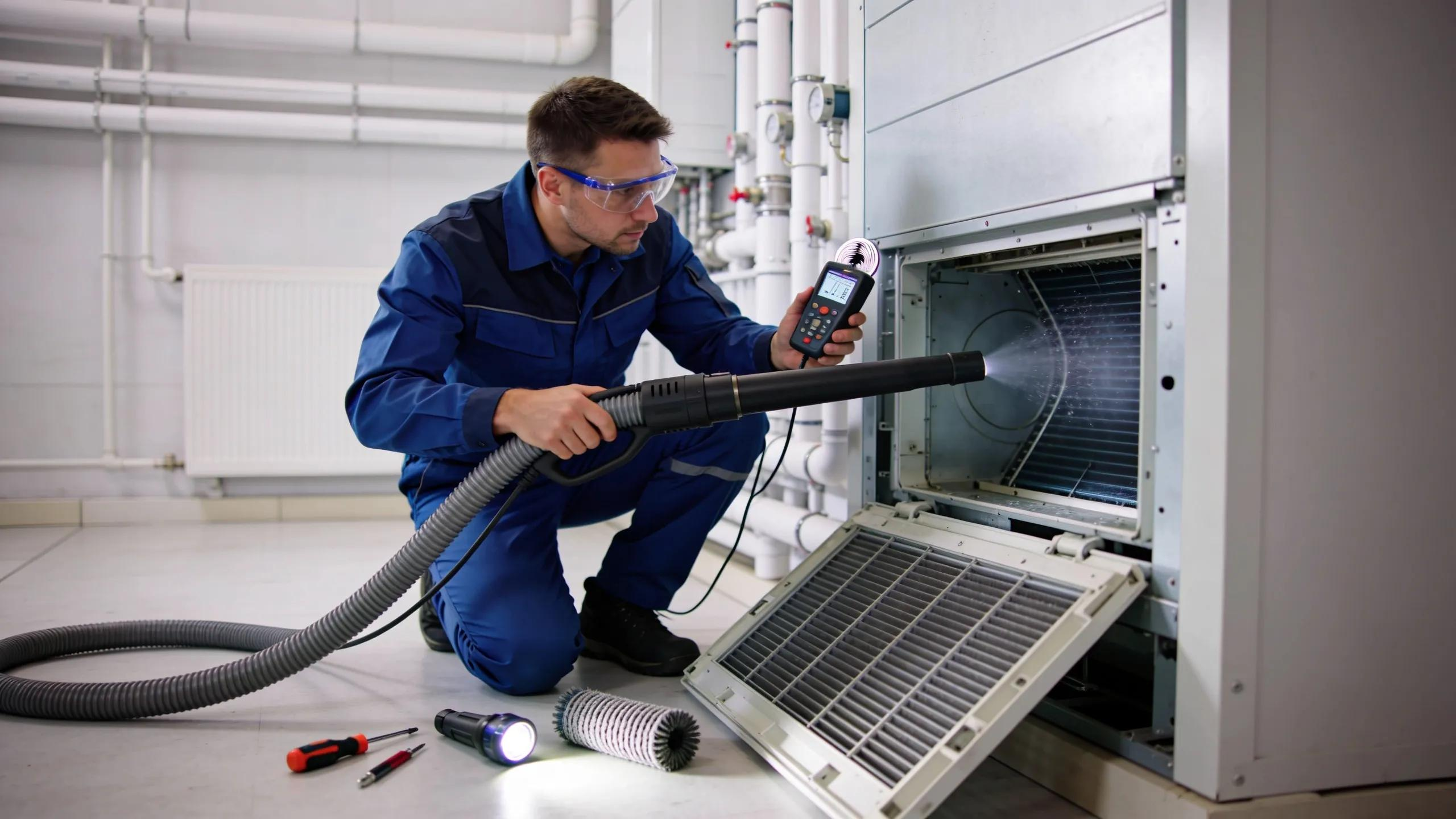
Professional maintenance delivers three principal benefits: restored efficiency through component cleaning and tuning, safety assurance via combustion and heat-exchanger checks, and extended system lifespan by preventing premature failures. Certified technicians inspect and adjust burners, check ignition systems, clean combustion chambers, test safety controls, and verify proper venting and airflow—actions that directly improve AFUE and reduce the likelihood of breakdowns. Regular maintenance typically produces efficiency gains by reducing throttling, improving combustion, and ensuring the blower motor runs at designed speeds, which lowers fuel use and service calls over time. Below is a table that outlines common maintenance tasks, recommended frequency, and the primary benefit each task delivers, helping homeowners prioritize services.
• Filter check/change — Frequency: Monthly or as needed — Primary Benefit: Maintains airflow and reduces blower work
• Burner and combustion cleaning — Frequency: Annually — Primary Benefit: Improves combustion efficiency and heat output
• Heat exchanger inspection — Frequency: Annually — Primary Benefit: Ensures safety and prevents efficiency loss
• Blower motor tune and belt check — Frequency: Annually — Primary Benefit: Restores airflow and reduces electrical use
• Duct pressure/visual check — Frequency: Every 1–3 years — Primary Benefit: Identifies leaks that waste heated air
Annual tune-ups typically cover these items and translate directly into lower energy bills, fewer emergency repairs, and a safer heating system. For homeowners in Northern Colorado who prefer local support, Halo Heating and Air offers certified technicians, transparent pricing, fast service, financing options, and a 100 percent satisfaction guarantee; scheduling maintenance with a trusted local provider ensures annual tune-ups are completed on an appropriate cadence. Understanding what an inspection includes prepares homeowners to ask targeted questions during service visits, which leads into the inspection checklist explained next.
What Are the Key Benefits of Annual Furnace Tune-Ups?
Annual tune-ups improve performance by optimizing combustion, cleaning heat-transfer surfaces, and calibrating control systems so the furnace operates closer to its rated AFUE and uses less fuel for the same heat output. Tune-ups also perform safety checks for carbon monoxide, gas leaks, and damaged heat exchangers, reducing health risks and preventing hazardous failures. Energy savings from a well-executed tune-up vary, but homeowners commonly see reduced runtime and fewer service calls—this lowers both immediate bills and long-term ownership costs. Scheduling annual service provides predictable maintenance intervals that keep systems running efficiently and sets expectations for potential repairs or upgrades.
What Does a Professional Furnace Inspection Include?
A professional inspection systematically evaluates the furnace’s core components—heat exchanger, burners, ignition system, blower motor, filters, venting, and controls—to identify wear, leaks, or performance drift that undermines efficiency. Technicians measure combustion efficiency where possible, verify proper airflow, check duct connections for obvious leakage, and test safety sensors and limit switches that protect the system and occupants. Findings typically result in a prioritized action list: immediate safety repairs, recommended efficiency improvements, and monitoring items that can extend the life of the system when addressed. Knowing what inspectors check helps homeowners interpret reports and decide whether repair, tune-up, or replacement is the next step.
When Should You Repair or Upgrade Your Furnace for Better Efficiency?
Deciding between repair and replacement requires assessing age, AFUE, repair frequency, safety concerns, and the expected payback period for an upgrade; a clear decision framework simplifies this choice. Generally, older units approaching 15–20 years, frequent costly repairs, or efficiency well below current DOE standards are red flags favoring replacement, while isolated failures on newer systems often justify repair. Below is an EAV-style comparison that helps homeowners weigh upfront cost, efficiency gains, expected payback, and lifespan impact for Repair vs Replace vs Upgrade to High-AFUE options to support rational decision-making.
• Repair (minor) — Typical Upfront Cost: Low to moderate — Expected Efficiency Gain: Small or none — Payback / Lifespan Impact: Short-term fix; extends life modestly
• Replace with similar AFUE — Typical Upfront Cost: High — Expected Efficiency Gain: Moderate (if older unit) — Payback / Lifespan Impact: Multi-year payback; resets lifespan
• Upgrade to high-AFUE — Typical Upfront Cost: Highest — Expected Efficiency Gain: Large (10–20%+ fuel saving) — Payback / Lifespan Impact: Faster payback with incentives; longer lifespan
What Are the Common Signs Your Furnace Is Losing Efficiency?
Common signs of declining furnace efficiency include rising heating bills without changes in thermostat behavior, uneven room temperatures, more frequent cycling on and off, and unusual noises during operation that indicate mechanical wear. These symptoms often show up gradually, and homeowners should first check simple items like filters and thermostat settings before calling a technician to diagnose deeper issues. If you notice repeated service calls or a visible decline in heat output relative to runtime, document dates and costs to inform a repair-versus-replace analysis. Recognizing these signals early enables timely inspection and prevents expensive emergency failures.
How Do AFUE Ratings Affect Furnace Performance and Energy Savings?
AFUE ratings indicate the fraction of fuel converted to heat under standardized test conditions and directly predict fuel usage: moving from an 80% to a 95% AFUE furnace typically cuts wasted fuel substantially and lowers annual fuel consumption by an estimated 10–20% depending on climate and usage. The DOE 2025 rules raise minimum efficiency expectations in many heating zones, meaning older low-AFUE units may no longer align with best-practice standards and could be less cost-effective over time. When comparing models, consider both AFUE and blower efficiency along with installation quality, because correct sizing and ductwork integration determine real-world performance. Interpreting AFUE alongside other system attributes leads naturally to the repair-or-replace threshold guidance below.
Should You Repair or Replace Your Furnace? Cost and Efficiency Considerations
A practical rule of thumb is to consider replacement when repair costs approach or exceed 30–40% of the price of a new unit, when the furnace is beyond its expected lifespan, or when efficiency gains from replacement materially shorten payback. Repair is sensible for single, low-cost fixes on relatively new systems with solid AFUE and no safety concerns, while replacement or upgrade becomes preferable if recurring repairs, low AFUE, and upcoming regulatory expectations make continued operation uneconomic. Financing options and rebates can shift this calculation substantially; homeowners should request quotes, compare lifetime operating costs, and factor in available incentives. For tailored assessments and financing support, Halo Heating and Air offers repair and installation services, transparent pricing, and financing options to help Northern Colorado homeowners proceed responsibly.
How Can Home Insulation and Ductwork Upgrades Boost Furnace Efficiency?
The building envelope and duct system determine how much of the furnace’s heat actually reaches living spaces; sealing and insulating these elements reduces wasted heat and lowers required furnace output. Duct leaks and uninsulated runs in attics or crawlspaces commonly account for significant heat loss—repairing and insulating ducts lowers required fuel input and smooths temperature distribution. Improving attic, rim-joist, and wall insulation reduces overall heating demand and allows smaller, more efficient equipment to meet comfort needs. The next sections explain why duct sealing matters and which insulation priorities yield the largest reductions in heating demand.
Why Is Sealing and Insulating Ductwork Critical for Heating Efficiency?
Sealing and insulating ductwork prevents warmed air from escaping into unconditioned spaces and reduces the workload on the furnace blower motor, translating into meaningful energy savings and more even indoor temperatures. Typical residential duct leakage can range widely, but even modest improvements—sealing obvious joints and insulating exposed runs—deliver measurable reductions in wasted heat. Homeowners can conduct simple visual inspections, feel for airflow at connections with the system running, and check attic registers for dust trails that suggest leaks; however, substantial leakage or buried ducts may require professional sealing or testing. Professional duct sealing and insulation complement furnace upgrades by ensuring the heat produced is delivered efficiently to living spaces.
Conclusion
Improving your furnace efficiency not only leads to significant savings on heating bills but also enhances overall comfort and reduces environmental impact. By implementing simple DIY tips and scheduling regular professional maintenance, homeowners can ensure their systems operate at peak performance. Understanding the importance of AFUE ratings and making informed decisions about repairs or upgrades can further optimize energy use. Take the first step towards a more efficient home by exploring our expert services and resources today.


.svg)