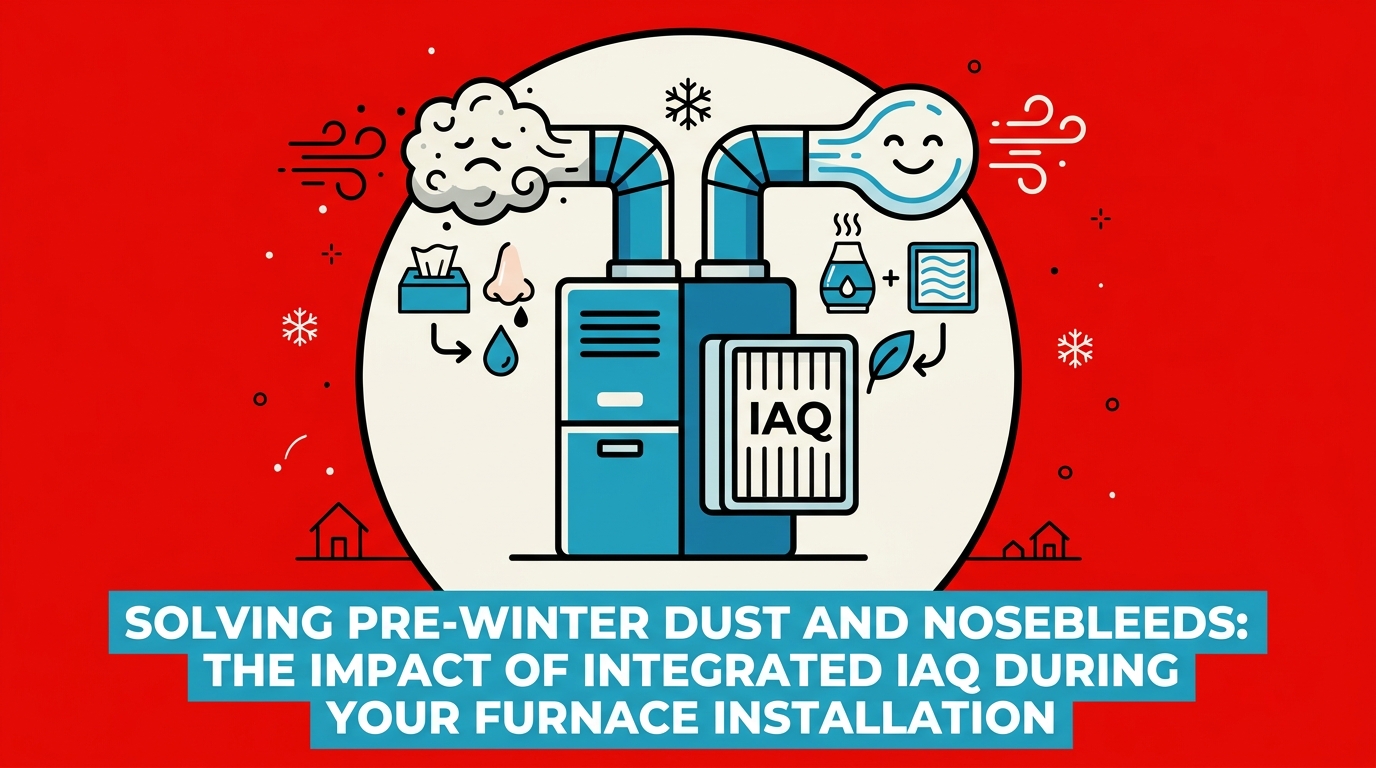
Solving Pre-Winter Dust and Nosebleeds: The Impact of Integrated IAQ During Your Furnace Installation
Solving Pre-Winter Dust and Nosebleeds: The Impact of Integrated IAQ During Your Furnace Installation
The September Shift: When Cooler Nights Bring Indoor Discomfort
When it comes to Solving Pre-Winter Dust and Nosebleeds: The Impact of Integrated IAQ During Your Furnace Installation, preparing your Loveland home for the distinct September weather shift is essential. As soon as the dry Colorado autumn begins, heating systems kick on and indoor comfort often takes a sudden downturn. You might notice a scratchy throat when you wake up, a sudden layer of dust coating your living room furniture, or static shocks every time you touch a doorknob. These are not just seasonal annoyances; they are clear indicators that your home's air quality is struggling to keep up with the changing weather.
The high-altitude Northern Colorado climate causes outdoor humidity to drop exceptionally fast in September compared to other regions. As the outside air loses its moisture, the air inside your home follows suit. Turning on an older heating system only accelerates this process, stripping whatever residual moisture is left in your living spaces. Our team at HALO Heating and Air often sees homeowners view a failing furnace as simply a mechanical issue that needs a direct replacement. However, swapping an old box for a new one without addressing the air quality leaves you with the same dry, dusty environment. Treating your upcoming furnace replacement as a logistical opportunity to integrate whole-home air quality upgrades is the missing piece to solving these seasonal symptoms for good.
Understanding the Impact of Plummeting Humidity on Your Health
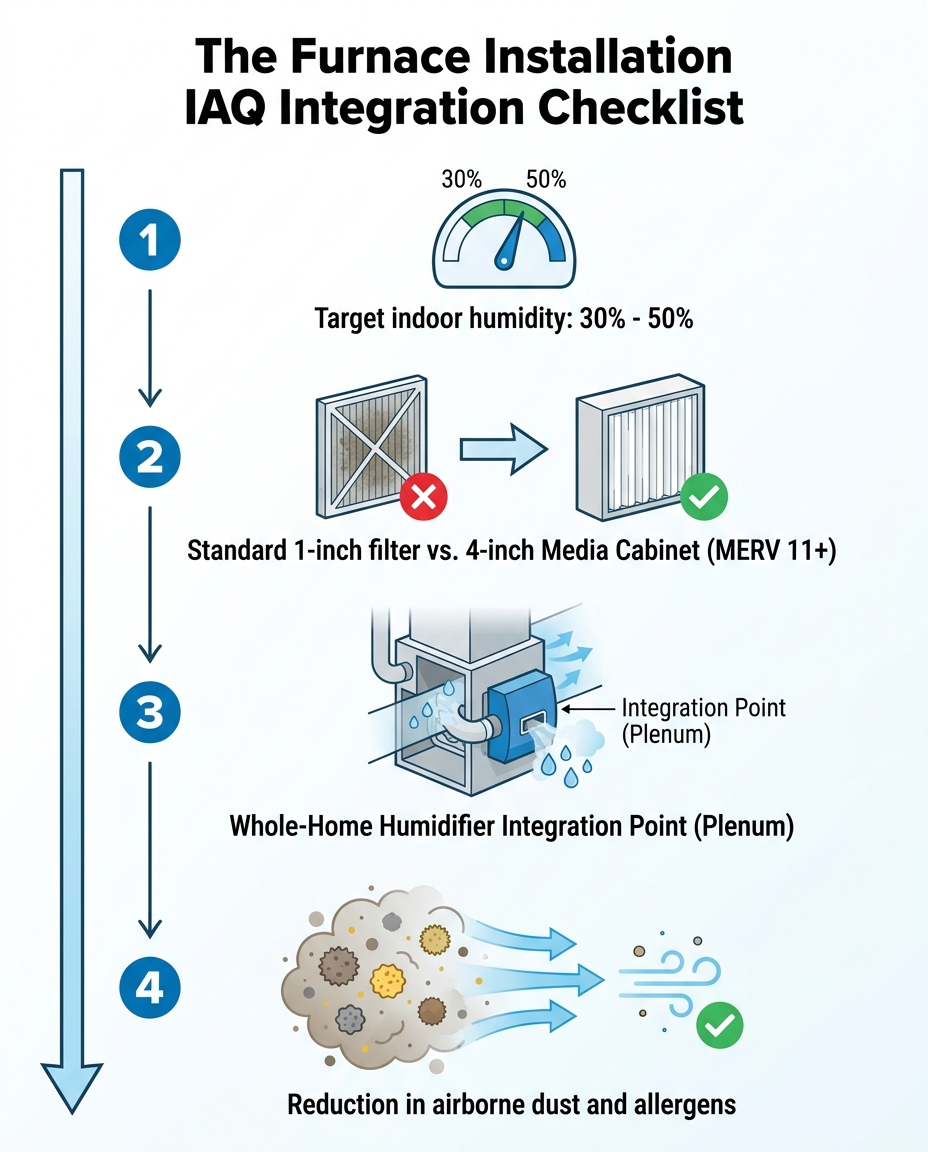
The science behind why your heating system makes you uncomfortable is rooted in how air handles moisture. Cold air naturally holds less water vapor than warm air. When that cold, dry outdoor air infiltrates your home and is heated by your furnace, its capacity to hold moisture expands, but no new moisture is added to it. This causes plummeting indoor relative humidity levels, often dropping well below the recommended thresholds. The Environmental Protection Agency (EPA) and ASHRAE guidelines state that ideal indoor humidity should remain between 30% and 50% for optimal health and comfort. When your home dips down to 15% or 20% humidity, your body immediately feels the deficit.
Your physiological response to this extreme dryness is often swift and unpleasant. The mucous membranes in your nose and throat rely on environmental moisture to function properly and trap airborne contaminants. When the air is excessively dry, these membranes dehydrate, crack, and bleed, leading to chronic morning nosebleeds. Furthermore, dry skin, irritated eyes, and aggravated asthma symptoms become everyday battles. A standard furnace swap does absolutely nothing to address this moisture deficit. It simply continues to heat the dry air, perpetuating the cycle of discomfort.
The Hidden Cost of Dry Heated Air
Standard heating cycles: Traditional combustion heating systems do not create moisture; they simply raise the temperature of the air passing over the heat exchanger. As the blower motor pushes this warm air through your ductwork, it actively dries out the already thin indoor air, pulling moisture from your skin, your hardwood floors, and your wooden furniture.
Cold air infiltration: Every home breathes. Drafty windows, unsealed doors, and tiny gaps in your home's envelope allow bone-dry outdoor air to seep inside constantly. This compounding effect means that without a dedicated system to introduce water vapor back into the environment, your furnace is fighting a losing battle against the dry climate.
The 1-Inch Filter Myth: Why Dust Takes Over Your Home
In our years serving Loveland and the Front Range, one of the most persistent misconceptions our HALO Heating and Air technicians encounter is that a new furnace equipped with a standard filter will magically solve household dust issues. You slide a fresh, clean fiberglass filter into the slot, expecting the air to be purified. The reality is that the standard 1-inch fiberglass filter was never designed to clean the air you breathe. Its sole purpose is to protect the furnace blower motor and heat exchanger from large, damaging debris like pet hair and large dust bunnies. It does almost nothing to stop the microscopic particles that actually trigger allergies and settle on your countertops.
When you combine inadequate filtration with severely dry air, you create the perfect storm for a dusty home. Dry air increases airborne particulate suspension. Without enough moisture in the air to weigh dust particles down, they remain suspended in the air currents longer, traveling freely through your ductwork and into every room. This makes dust far more visible and prevalent, leading to the endless frustration of constant dusting chores during the winter months.
Many homeowners try to combat this by purchasing room-sized air purifiers. While these portable units can help clean the air in a single bedroom, they are completely ineffective at managing the air quality of an entire house. As soon as you walk out of the bedroom, you are back in the dusty, dry environment. A whole-home approach is required to capture the dust before it ever reaches your living spaces.
Seizing the Opportunity: Upgrading Equipment and IAQ Simultaneously
When you schedule a furnace replacement, your HVAC technician is already disassembling the core of your home's comfort system. The ductwork is exposed, the plenum (the primary duct box sitting directly above or below the furnace) is being modified, and the electrical connections are being re-routed. This makes the installation day the absolute best time to add indoor air quality components. Trying to add these systems later results in unnecessary labor, extra service call fees, and duplicate ductwork modifications.
Our local team at HALO Heating and Air focuses on evaluating a home's complete air quality profile before swapping equipment, prioritizing whole-home comfort rather than just a box swap. By taking an integrated approach, we ensure that the new blower motor works in perfect tandem with your IAQ systems.
The Integrated Installation Checklist:
• Plenum modifications: The sheet metal work required to fit a new furnace is the exact same sheet metal work needed to mount a whole-home humidifier and a media filter cabinet. Doing it all at once ensures an airtight, seamless fit.
• Electrical integration: Modern IAQ components need to communicate with your furnace's control board. Wiring a humidifier and an active air purifier directly into the new furnace's motherboard during the initial setup guarantees they operate synchronously with the heating cycle.
• Blower motor calibration: New furnaces feature variable-speed ECM blower motors. When IAQ components are installed simultaneously, the technician can calibrate the blower speed to account for the exact airflow resistance of the upgraded filter, ensuring maximum efficiency.
• Labor efficiency: Piecemeal installations—buying the furnace in October and deciding you need a humidifier in January—mean paying for a second, separate installation process. Bundling them saves significant time and disruption to your home.
The Furnace Installation IAQ Integration Checklist
Whole-Home Humidification: A Direct Solution for Morning Nosebleeds
To truly combat the plummeting indoor relative humidity levels that cause winter nosebleeds, you need a system that treats every cubic foot of air in your home. This is where whole-home humidifiers outshine portable room units completely. A portable humidifier requires you to manually carry heavy water jugs, clean the tank weekly to prevent mold, and only provides relief in a small radius. A whole-home humidifier, on the other hand, is installed directly into your HVAC ductwork and plumbed into your home's water line.
As the furnace heats the air, the humidifier introduces precisely controlled water vapor directly into the heated air stream before it ever reaches your vents. This conditioned, moisture-balanced air is then distributed evenly to every room in the house. The relief provided to your respiratory system is immediate. Your skin stops cracking, your throat stays hydrated overnight, and the structural wood in your home—like hardwood floors and antique furniture—is protected from shrinking and splitting.
One recent homebuyer moved into a new house during the winter and quickly realized they needed a new furnace to deal with severe dry air issues and asthma symptoms. Instead of just replacing the heating unit, their technician recommended, ordered, and installed a new system complete with a HEPA filter and a whole-home humidifier. The outcome was a consistent temperature year-round, significantly reduced dust, and much better respiratory comfort for the entire family. Integrating this technology directly resolves chronic issues rather than just putting a band-aid on them.
Automated Comfort Control
Weather-responsive adjustments: Modern whole-home humidifiers feature automatic controls that monitor the outdoor temperature. If a massive cold front rolls in, the system automatically dials back the humidity slightly to prevent condensation from forming on your freezing windows, then ramps it back up as the weather normalizes.
Zero daily maintenance: Because the system is tied directly to your plumbing and drains, there are no tanks to fill and no daily maintenance required. The water panel is simply swapped out once a year during your routine fall furnace tune-up.
Advanced Media Filtration: Breathing Easier and Cleaning Less
If you are tired of dusting the same tables week after week, upgrading your filtration during a furnace install is the answer. The transition from a flimsy 1-inch filter to a deep-pleated media cabinet is one of the most impactful changes you can make for your home's air quality. A media filter cabinet is a specialized housing installed between your return air duct and the furnace itself. It holds a massive 4-inch or 5-inch thick pleated filter.
These thicker filters utilize a much higher MERV (Minimum Efficiency Reporting Value) rating. Because they have exponentially more surface area than a 1-inch filter, they can capture microscopic dust, pet dander, pollen, and allergens without restricting the airflow your furnace needs to operate safely. When you are choosing the best air purifier for your home, starting with a robust media cabinet is the foundation of clean air.
• Primary Purpose — Standard 1-Inch Filter: Protects the blower motor from large debris. — 4-Inch Media Cabinet (MERV 11+): Improves indoor air quality and protects equipment.
• Particle Capture Size — Standard 1-Inch Filter: Only catches large particles (dust bunnies, hair). — 4-Inch Media Cabinet (MERV 11+): Captures microscopic particles (pollen, fine dust, dander).
• Airflow Restriction — Standard 1-Inch Filter: Can choke the system if a high MERV rating is forced into a 1-inch slot. — 4-Inch Media Cabinet (MERV 11+): Deep pleats allow high filtration with excellent airflow.
• Replacement Frequency — Standard 1-Inch Filter: Must be replaced every 30 to 60 days. — 4-Inch Media Cabinet (MERV 11+): Only needs replacing every 6 to 12 months.
• Impact on Dusting — Standard 1-Inch Filter: Minimal to no reduction in household dust. — 4-Inch Media Cabinet (MERV 11+): Significant, noticeable reduction in visible dust accumulation.
By capturing the fine particulates that a standard filter misses, a media cabinet connects directly to a noticeable reduction in household dust accumulation across Loveland and the Front Range. You breathe easier, and you spend far less time walking around with a microfiber cloth.
Planning Your HVAC Upgrade Strategically Before Winter
Timing is everything when it comes to upgrading your heating system. The dry Colorado autumn (September transition) is the ideal window to schedule your assessments. Once the first hard freeze hits, HVAC companies are flooded with emergency no-heat calls, making it harder to schedule a comprehensive, unhurried installation. By planning in early fall, you give yourself the time to evaluate all your options and design a system that truly fits your home's needs.
A complete integrated system is an investment in your property and your health. Take the time to evaluate financing options for HVAC upgrades to make a comprehensive whole-home solution accessible on a comfortable monthly budget. Additionally, generic utility rebates or federal tax credits may apply to qualifying high-efficiency heating upgrades, which can help offset the initial investment. Always verify current incentive programs with your utility provider or a tax professional.
When you sit down for your initial estimate, do not just accept a standard equipment quote. Ask your technician specifically about IAQ add-ons. Request a breakdown of how a media cabinet and a whole-home humidifier will fit into the proposed ductwork modifications. A proactive conversation now ensures you aren't left wishing for better air quality in the dead of winter.
Common Questions About Furnace Upgrades and Indoor Air Quality
Why is the air in my house so dry in the fall? As outdoor temperatures drop, the air loses its ability to hold moisture. When this cold, dry air enters your home and is heated by your furnace, its relative humidity plummets even further. This drastic drop in moisture levels is what causes the classic symptoms of dry skin, static shocks, and respiratory irritation during the autumn transition.
Does a new furnace reduce dust in the home? A new furnace on its own will not reduce dust if it is paired with a standard 1-inch filter. The blower motor simply circulates the existing air. To actively reduce household dust, the new furnace must be paired with an upgraded media filtration cabinet that utilizes deep-pleated, high-MERV filters to trap fine airborne particulates.
Should I install a humidifier with my new furnace? Yes, installing a whole-home humidifier concurrently with a new furnace is highly recommended in dry climates. The installation process is much more efficient because the ductwork and plenum are already being modified. Integrating it directly with the new blower motor ensures optimal moisture distribution throughout your entire home.
Can a standard furnace cause nosebleeds? While the furnace itself doesn't cause nosebleeds, the extremely dry air it produces certainly does. Combustion heating strips residual moisture from the indoor air, drying out the mucous membranes in your nasal passages. When these membranes dehydrate and crack, frequent morning nosebleeds are the direct result.
What is the difference between a furnace filter and a media filter cabinet? A standard furnace filter is typically a 1-inch fiberglass mesh designed only to keep large debris out of the equipment. A media filter cabinet is a dedicated housing installed in the ductwork that holds a 4-inch to 5-inch thick pleated filter. The media cabinet provides vastly superior air purification without restricting the system's airflow.
How does a whole-home humidifier connect to my HVAC system? A whole-home humidifier is mounted directly to the supply or return plenum (the main ductwork) above or below your furnace. It is tied into your home's water supply and wired to the furnace control board. When the heating cycle initiates, water vapor is introduced into the airflow and distributed evenly through your home's vents.
Take Control of Your Indoor Environment This Fall
Replacing an aging heating system is a rare opportunity to completely transform your indoor comfort. By moving beyond a simple box swap and integrating advanced air quality components, you can eliminate the plummeting indoor relative humidity levels that cause so much misery. The relief from dry skin, chronic nosebleeds, and endless dusting is well within reach when you plan strategically.
As you prepare for the colder months ahead, remember that solving pre-winter dust and nosebleeds, the impact of integrated IAQ during your furnace installation, and your family's overall comfort are all deeply connected. Reach out to a professional to evaluate your home's specific needs, and take control of your air quality before the harsh winter weather arrives.
See what homeowners across Windsor and Northern Colorado are saying about our reliable service, expert workmanship, and commitment to getting the job done right.
I called Halo when my water heater started leaking from the bottom. They responded quickly and reviewed my options for a new water heater. Steve was able to locate the particular water heater I wanted and had the old one removed and the new one Installed that day. I can't thank them enough for the prompt service. I highly recommend Halo and will use them again if the need arises. They were very courteous and professional.
Rick H.
Steve, the HALO technician, was great. He did a quick view of our furnace and could see it was malfunctioning. He was very transparent, showing me his initial findings, explaining how the furnace should work and trying a step to correct the problem. When that didn't work, he inspected the wiring more closely and found a crimped wire leading into the burner assembly. He replaced the wire and the furnace resumed normal operation. Thanks much, Steve!
Toni B.
They were on time, friendly and competent. In one day put in new furnace, took away old one. Permit was issued and city inspector said they did a really good job. I will use Halo for all my future HVAC needs.
Roger M.
Chernet and Steve were incredibly professional and compassionate! They thoroughly explained the issue with my furnace, made sure that i understood, and then showed me what they found.
Joann H.
I’m am so impressed with the quality and depth of service that I received. The details about what was being done and how the system works were so helpful to me and the most valuable as I know how to help diagnose my own system. They tested everything and were able to diagnose my problems and get them fixed. This was after two other companies had tried to do this and failed I would recommend them again to everyone who wanted expertise and high level skills and knowledge who will get the problem resolved.
Linda T.
Halo is a excellent service for heating and air conditioning. Very attentive, informative and a great problem solver.
Bob B.
I called Halo when my water heater started leaking from the bottom. They responded quickly and reviewed my options for a new water heater. Steve was able to locate the particular water heater I wanted and had the old one removed and the new one Installed that day. I can't thank them enough for the prompt service. I highly recommend Halo and will use them again if the need arises. They were very courteous and professional.
Rick H.
Steve and Chernet literally saved our kennel dogs and puppies by repairing a heating system that was not designed to function in negative temperatures. They came up with a plan to keep the temperatures warm and monitored them throughout the night!! They did that! And did it all for an extremely fair price. We have had several other HVAC companies come to our business to“fix” our system. Nobody had ever been honest with us, and kept charging more and more each visit leaving us with a system that really was not designed to work properly. We will never use another HVAC company again. Halo has our business for life!!
Furnace blowing cold air or smelling like burning dust? Get common homeowner questions answered so you know when it's just dust burn-off versus a real hazard.
Upgrading your furnace this fall won't solve the excessive dust and morning nosebleeds caused by dry air. Adding whole-home humidification at installation changes everything.
An abrupt August AC breakdown doesn't always mean your system is dead. Simple vibration-induced electrical faults often trigger unnecessary total replacement quotes.


.svg)