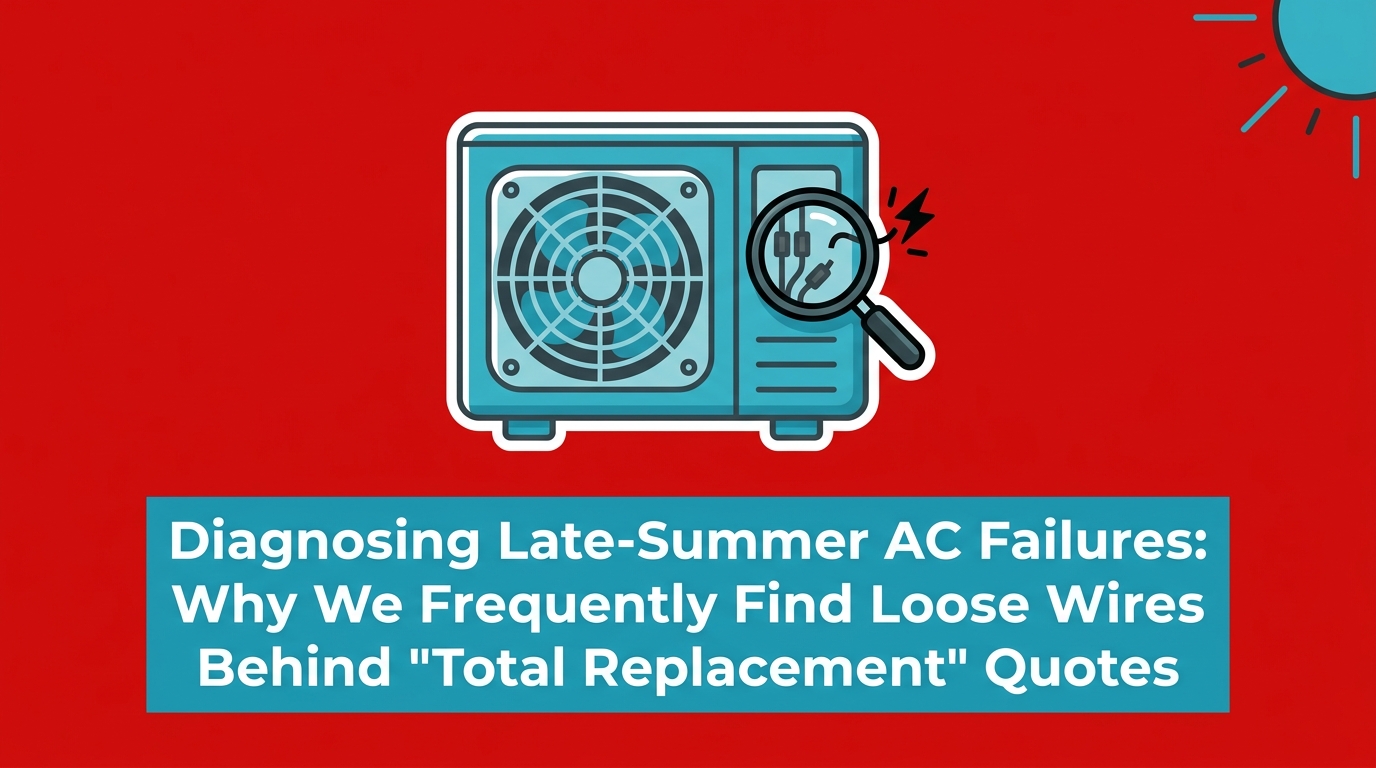
Diagnosing Late-Summer AC Failures: Why We Frequently Find Loose Wires Behind 'Total Replacement' Quotes
Diagnosing Late-Summer AC Failures: Why We Frequently Find Loose Wires Behind 'Total Replacement' Quotes
Is Your AC Truly Dead, or Is It Just a Loose Wire?
Did your cooling system just abruptly stop working in the middle of a late-summer heatwave? If you are suddenly dealing with a hot house and a silent outdoor unit, you might be surprised by the reality of diagnosing late-summer AC failures: why we frequently find loose wires behind 'total replacement' quotes is a topic every homeowner should understand before making a massive financial decision.
A common, frustrating scenario unfolds in neighborhoods across Loveland, CO, every August. A homeowner's air conditioner shuts down, a technician is dispatched, and within fifteen minutes, the homeowner is handed a massive quote for a total system replacement. The diagnosis is often presented as a catastrophic compressor failure or a completely seized motor. You are left at a critical decision point: do you accept the replacement quote to get the cooling back on as fast as possible, or do you seek a second opinion?
The core truth of end-of-season breakdowns is that simple, vibration-induced electrical faults often masquerade as catastrophic mechanical failures. When you need reliable air conditioning services, securing a thorough diagnostic evaluation can mean the difference between a minor electrical repair and replacing an entire system years before its actual lifespan is over.
The Toll of Continuous Cycling: Why August Tests Your System's Limits
To understand why these specific electrical failures peak late in the season, we have to look at the mechanical reality of how your outdoor condensing unit operates. An air conditioner is not a static appliance; it is a powerful machine with heavy moving parts. Every time the system turns on, the compressor generates significant torque, and the fan motor spins rapidly to pull air through the condenser coils.
This continuous operation creates relentless micro-vibrations throughout the entire metal chassis of the unit. During the mild days of early summer, the system might only cycle a few times a day. However, Loveland's peak August heat forces systems to run for extended hours, marking the climax of seasonal wear and tear where vibration-induced faults peak. The sheer volume of operational hours means the wiring harness inside the unit is subjected to constant, low-frequency shaking.
Over a three to four month period of heavy usage, this mechanical stress specifically targets the electrical components. The wires connecting your contactor, capacitor, and compressor are secured by metal spade terminals or screw lugs. While they are tightened securely at the factory (or during a spring tune-up), the cumulative effect of August peak heat / late-summer wear takes a physical toll. Understanding the mechanics of this wear is a critical part of figuring out why your AC is running constantly without cooling, as the system struggles to operate with compromised electrical pathways.
The Anatomy of Vibration: How Wires Shake Loose Over Time
When a system fails late in the season, the root cause often lies in the microscopic movement of electrical connections. This is a natural consequence of heavy usage, not necessarily a sign that you bought a bad unit or that your system is too old to function. Routine checks can catch this degradation before it causes a complete system shutdown, which is why regular AC maintenance and tune-ups are so heavily recommended by manufacturers.
What Happens Inside the Condensing Unit?
Inside the outdoor cabinet, the compressor acts as the heart of the system, pumping high-pressure refrigerant. The fan motor sits directly above it. Both of these heavy components generate kinetic energy. The wiring harness, which routes high-voltage electricity to these parts, absorbs a portion of this kinetic energy every time the unit cycles on.
• Thermal Expansion: As electrical current flows through the wires, they naturally heat up and expand slightly. When the system shuts off, they cool and contract.
• Physical Shaking: Combined with the thermal expansion, the physical vibration of the compressor running constantly wiggles the metal spade terminals.
• Friction Loss: The tight grip of the metal connectors slowly loosens over thousands of cooling cycles.
Why Does It Take Until Late Summer to Break?
The loosening process is incredibly slow. A wire does not simply fall off in June. Instead, it experiences "terminal fatigue" over the duration of the cooling season. By the time late August arrives, the connection may have backed off just enough to create an air gap. This gap increases electrical resistance, which generates excess heat, eventually burning the terminal end or causing the wire to lose contact entirely, resulting in vibration-induced electrical faults.
Why a Disconnected Wire Perfectly Mimics a Dead Compressor
When a wire finally shakes loose, the resulting symptoms can be terrifying for a homeowner and highly deceptive to an untrained eye. You might walk outside and notice that the system fan is running perfectly fine, blowing air upward, but the air coming out of your indoor vents is completely warm. Alternatively, you might hear a loud, aggressive humming noise coming from the outdoor unit that lasts for a few seconds before going silent.
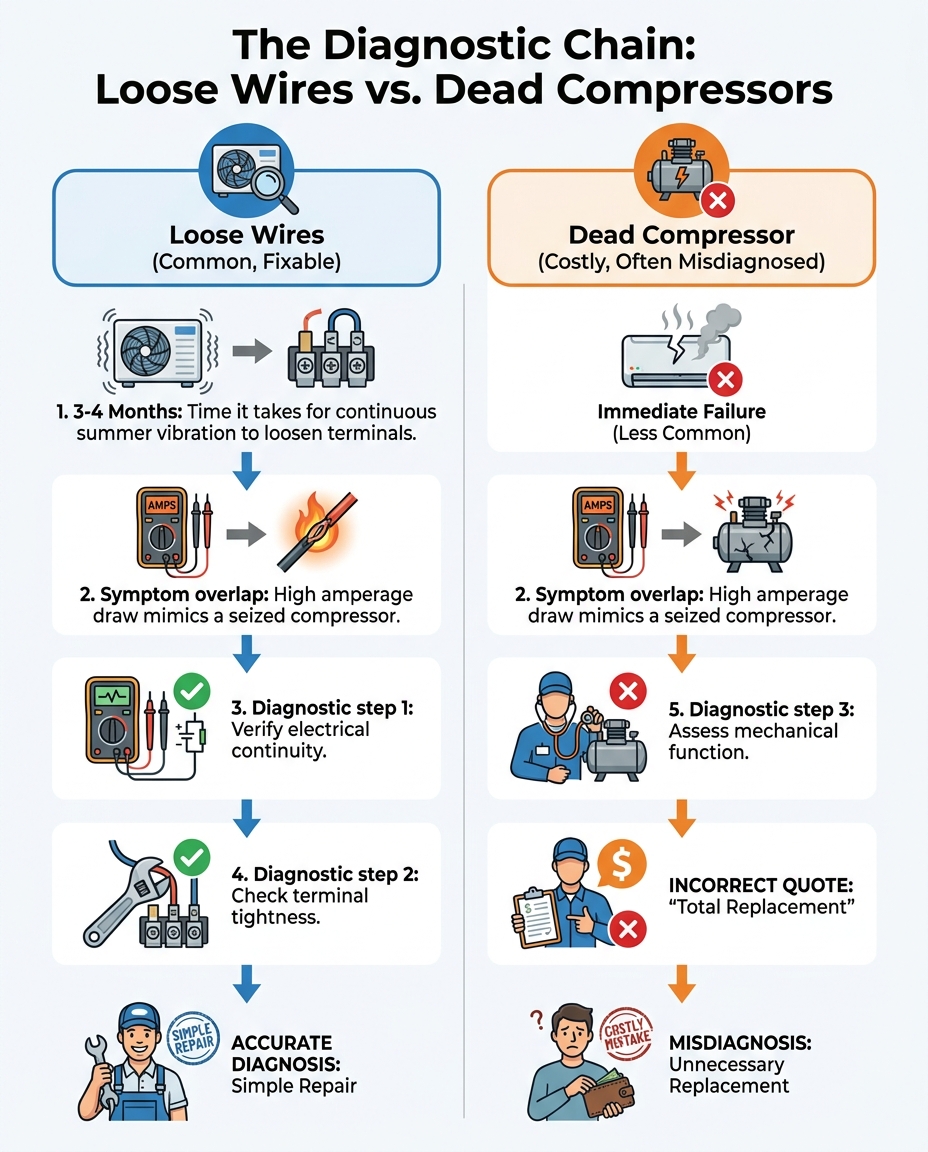
Here is why this happens: a loose wire to a compressor restricts the flow of proper voltage. When the thermostat calls for cooling, the compressor tries to start but lacks the clean electrical path required to overcome the pressure of the refrigerant. Because it cannot start, it draws a massive amount of high amperage—often referred to as locked rotor amps. This high amperage draw causes the system to overheat quickly, tripping internal thermal overloads or flipping your circuit breaker at the electrical panel.
To a rushed technician, these symptoms perfectly mimic a seized or "dead" compressor. They put their meter on the system, see the high amperage draw, hear the humming, and immediately write up a quote for a new unit. However, electrical connection integrity must be verified before condemning mechanical parts.
• Loud humming followed by silence — What a Rushed Tech Assumes: Compressor is mechanically seized and dead. — What a Loose Wire Actually Does: Voltage is dropping at a loose terminal, preventing a normal start.
• System repeatedly trips the breaker — What a Rushed Tech Assumes: Internal short circuit inside the compressor windings. — What a Loose Wire Actually Does: Loose connection is causing electrical arcing and high amp draw.
• Fan runs but no cooling occurs — What a Rushed Tech Assumes: Compressor has completely failed. — What a Loose Wire Actually Does: Compressor wire vibrated off the contactor completely.
The Diagnostic Chain: Loose Wires vs. Dead Compressors
Second Opinions Matter: Avoiding the 'Total Replacement' Trap
The HVAC industry faces immense pressure during peak season. When temperatures soar, dispatch boards fill up, and technicians are often pushed to run as many calls as possible in a single day. Unfortunately, this rushed environment creates a trap for homeowners. Some technicians may jump to replacing aging units rather than taking the time to perform deep, methodical diagnostics on a hot afternoon.
A typical pattern we see involves homeowners being told they need a completely new system based on a rapid evaluation, only to discover later that the true issue was incredibly minor. In fact, a common scenario involves a system that supposedly needed extensive, costly repairs according to another company's evaluation. Upon a thorough second check, simply tightening loose wires and changing a restricted air filter completely resolved the issue, returning the system to normal operation without any major component replacements.
You should absolutely demand a second opinion if the initial technician spent less than twenty minutes at your home, did not open the electrical panel on the outdoor unit to physically inspect the wiring harness, or immediately pushed a sales brochure without explaining the exact electrical readings they found. While AC replacement is eventually necessary for every home, it should never be the default answer for August peak heat / late-summer wear without proving the compressor is truly dead.
Diagnostic-First Troubleshooting: How to Verify Electrical Integrity
Protecting yourself from misdiagnosis requires understanding how a proper, authoritative evaluation should work. At HALO Heating and Air, our strict diagnostic protocol mandates testing electrical continuity and terminal tightness before ever declaring a compressor dead. This diagnostic-first approach is what separates a quick sales quote from a lasting, honest repair.
After a frustrating experience with rushed contractors, homeowners often just want clarity and truth. We frequently see situations where a homeowner schedules an evaluation after a bad contractor experience; a same-day, methodical diagnostic visit accurately identifies the true electrical problem and provides an honest, professional solution on the spot. Here is how a professional verifies electrical integrity (note: these steps involve high-voltage electricity and should only be performed by licensed professionals):
1. Visual Inspection of the Wiring Harness: The technician must power down the unit and visually inspect every single wire leading from the contactor to the compressor and fan motor. They look for melted insulation, heat discoloration on the metal terminals, or wires that have physically vibrated off their posts.
2. Testing Electrical Continuity: Using a multimeter, the technician checks for continuity across the electrical pathways. This confirms whether electricity has an unbroken path to travel. If a wire is loose, the meter will show an open line or high resistance.
3. Verifying Terminal Tightness: Every screw lug and spade terminal is physically checked for tightness. A connection that looks secure to the naked eye might actually be loose enough to cause a voltage drop under a heavy load.
4. Isolating the Compressor: If the wiring is perfectly secure and the voltages are correct, the technician will then test the compressor windings directly (often called "megging" the compressor) to confirm if the internal mechanical components have actually failed.
This level of detail ensures that when a major repair in Loveland, CO, is recommended, it is based on undeniable mechanical evidence, not a rushed assumption.
Frequently Asked Questions About Late-Summer AC Breakdowns
Can a loose wire cause my AC compressor to stop working?
Yes. A loose connection prevents proper voltage from reaching the compressor, causing it to draw high amps and fail to start. When the voltage drops across a loose terminal, the compressor lacks the electrical power to overcome the pressure of the refrigerant inside the system. This often results in the compressor humming loudly for a few seconds before shutting off completely to protect itself from overheating.
How do I know if I need a new AC or just an electrical repair?
Only a thorough diagnostic test of the electrical continuity and contactors can confirm if the mechanical components are truly dead. A professional technician must verify that the correct voltage is reaching the compressor terminals under a load. If the wiring is secure, the capacitor is functioning, and the compressor still draws locked rotor amps or shows a short to ground, then a replacement is likely necessary.
Why does my AC trip the breaker in late summer?
Months of vibration can loosen wires, leading to electrical arcing or high amperage draws that trip the safety breaker. As your system runs continuously through July and August, the constant shaking causes terminal fatigue. When a wire becomes loose, the electrical resistance spikes, which increases the heat and the amperage drawn by the system, eventually exceeding the limit of your circuit breaker.
Should I get a second opinion on an AC replacement quote?
Absolutely. If the initial technician did not thoroughly test the electrical connections, a second opinion can save you from an unnecessary replacement. Many vibration-induced electrical faults perfectly mimic catastrophic failures. Getting an independent evaluation ensures that all minor, inexpensive fixes (like replacing a burnt wire terminal or a failing capacitor) have been ruled out before you commit to a major purchase.
How can I prevent vibration-induced faults in my cooling system?
Routine seasonal maintenance includes tightening all electrical connections, which prevents them from vibrating loose during peak usage. A comprehensive tune-up involves a technician putting a tool on every electrical lug and inspecting the wiring harness for signs of wear. By securing these connections before the heavy summer heat arrives, you drastically reduce the risk of a sudden end-of-season breakdown.
Next Steps: Securing an Honest Assessment for Your Cooling System
Understanding how simple late-season electrical faults can masquerade as total system failure gives you the power to make informed decisions about your home. A sudden breakdown in the middle of August does not automatically mean you are facing a costly total replacement. Often, the culprit is nothing more than a loose wire that has succumbed to months of vibration.
If you are dealing with a malfunctioning system in Loveland, CO, and are questioning a recent evaluation, do not rush into a major purchase. Reach out for a thorough, honest diagnostic evaluation to verify the true state of your equipment. Contact our team today for professional AC repair in Loveland, and let us ensure your system is accurately diagnosed before you make your next move.
See what homeowners across Windsor and Northern Colorado are saying about our reliable service, expert workmanship, and commitment to getting the job done right.
I called Halo when my water heater started leaking from the bottom. They responded quickly and reviewed my options for a new water heater. Steve was able to locate the particular water heater I wanted and had the old one removed and the new one Installed that day. I can't thank them enough for the prompt service. I highly recommend Halo and will use them again if the need arises. They were very courteous and professional.
Rick H.
Steve, the HALO technician, was great. He did a quick view of our furnace and could see it was malfunctioning. He was very transparent, showing me his initial findings, explaining how the furnace should work and trying a step to correct the problem. When that didn't work, he inspected the wiring more closely and found a crimped wire leading into the burner assembly. He replaced the wire and the furnace resumed normal operation. Thanks much, Steve!
Toni B.
They were on time, friendly and competent. In one day put in new furnace, took away old one. Permit was issued and city inspector said they did a really good job. I will use Halo for all my future HVAC needs.
Roger M.
Chernet and Steve were incredibly professional and compassionate! They thoroughly explained the issue with my furnace, made sure that i understood, and then showed me what they found.
Joann H.
I’m am so impressed with the quality and depth of service that I received. The details about what was being done and how the system works were so helpful to me and the most valuable as I know how to help diagnose my own system. They tested everything and were able to diagnose my problems and get them fixed. This was after two other companies had tried to do this and failed I would recommend them again to everyone who wanted expertise and high level skills and knowledge who will get the problem resolved.
Linda T.
Halo is a excellent service for heating and air conditioning. Very attentive, informative and a great problem solver.
Bob B.
I called Halo when my water heater started leaking from the bottom. They responded quickly and reviewed my options for a new water heater. Steve was able to locate the particular water heater I wanted and had the old one removed and the new one Installed that day. I can't thank them enough for the prompt service. I highly recommend Halo and will use them again if the need arises. They were very courteous and professional.
Rick H.
Steve and Chernet literally saved our kennel dogs and puppies by repairing a heating system that was not designed to function in negative temperatures. They came up with a plan to keep the temperatures warm and monitored them throughout the night!! They did that! And did it all for an extremely fair price. We have had several other HVAC companies come to our business to“fix” our system. Nobody had ever been honest with us, and kept charging more and more each visit leaving us with a system that really was not designed to work properly. We will never use another HVAC company again. Halo has our business for life!!
Furnace blowing cold air or smelling like burning dust? Get common homeowner questions answered so you know when it's just dust burn-off versus a real hazard.
Upgrading your furnace this fall won't solve the excessive dust and morning nosebleeds caused by dry air. Adding whole-home humidification at installation changes everything.
An abrupt August AC breakdown doesn't always mean your system is dead. Simple vibration-induced electrical faults often trigger unnecessary total replacement quotes.


.svg)